
"COE Bolivia"
400 article(s) found

Bolivian coffee producing areas introduce how to brew Bolivian coffee.
For the exchange of professional baristas, please follow the coffee workshop (Wechat official account cafe_style) in Bolivia. 15g powder, medium grinding (small Fuji ghost tooth cutter 4 grinding), v60 filter cup, 88-89 degrees water temperature, 30g water injection for the first time, steaming for 27 seconds, water injection to 105g water cut off, wait for the powder bed water to drop to half and then water injection, slow water injection until 225g water, the end section is not

Introduction to the taste of Bolivian boutique coffee beans with rich and unique aroma
Bolivia not only has a unique growing environment, but also has an excellent coffee variety Typica. In the past two hundred years, the main variety of coffee in Yanggas area is the ancient Tibica. Tibica coffee has a balanced and soft flavor, with lively aroma and rich sour taste. Unfortunately, the low production of Tibika and its poor disease resistance make Bolivia's

A brief introduction to the production area of Yongas in the northeast of La Paz, the Snow vein Manor in Bolivia.
This champion bean has a variety of floral aromas, vanilla and honey for a long time. Bolivia's high-quality estates, very high altitude, perennial low temperature environment, so that coffee fruit growth is slow, tight enough, aroma is also charming, floral aroma is obvious, such as careful handling, cherries with the same maturity, often have a clean and meticulous high-grade taste, this elegant vanilla and honey aromas are very attractive. Whole
Home-baked boutique coffee (1) Bolivia
It is autumn, and the weather is getting cooler. Autumn is crisp, and the training that has been drilled into the roaster all summer has finally yielded some results before the arrival of this autumn. For baking, it is a touch of the door, and finally a little breath: Oh! It turns out that the baking method can be found out. Compared with the hot summer, it seems that every bean in autumn can impress people with its own unique taste.

Home-baked boutique coffee (1) Bolivia
It is autumn, and the weather is getting cooler. Autumn is crisp, and the training that has been drilled into the roaster all summer has finally yielded some results before the arrival of this autumn. For baking, it is a touch of the door, and finally a little breath: Oh! It turns out that the baking method can be found out. Compared with the hot summer, it seems that every bean in autumn can impress people with its own unique taste.

How does Bolivian coffee taste? how does Bolivian coffee brew?
For the exchange of professional baristas, please pay attention to the flavor of coffee workshop (Wechat official account cafe_style): dry aromas of roasted nuts and almonds, supple acidity of orange and white pomelo on the entrance, sweet caramel on the whole, smooth texture of firm fruit milk, cleanliness and balance, and attractive herbal aroma in finish. Bolivian coffee has a rich and unique aroma, regardless of

Flavor and taste characteristics of Bolivian coffee producing area introduction of boutique coffee beans in manor
In 1932, the Chaco War broke out between Bolivia and Paraguay for oil resources in the North Chaco region. Bolivia was defeated and lost a large area of territory. The people's armed uprising broke out in April 1952, and Paisdensolo, leader of the nationalist revolutionary movement, became president. Since then, there have been frequent military coups and long-term political instability. Modern assets with South American characteristics were restored in October 1983

Slippery taste of Bolivian coffee manor features boutique coffee beans
The legal capital, the seat of the Supreme Court, with a population of 284000, 2790 meters above sea level. Founded in 1538, the city was formerly known as Chuquisaka. The city witnessed the first uprising in South America against Spanish rule in 1809. Bolivia declared its independence here in 1825 and became the capital in 1826. In 1839, it was renamed Sucre to commemorate the second president of Bolivia, General Antonio Jos é Sucre.

Bolivian coffee flavor, character, taste and estate introduction
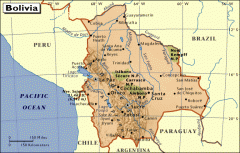
Bolivia is a landlocked country in central South America, bordered by Brazil in the northeast, Paraguay in the southeast, Argentina in the south, Chile in the southwest and Peru in the west. The main terrain is plateau. Bolivia is the highest plateau country in the world, with an average altitude of more than 3000 meters. The capital La Paz is 3660 meters above sea level and is known as the highest capital in the world. Three points in Bolivia

Flavor description of Bolivian Coffee Bean Manor
Follow the caf é (official Wechat account vdailycom) and found that Bolivian coffee has a rich and unique aroma, whether it is the aroma of ground beans or the aroma of the coffee produced, similar to the mixture of flower and fruit aroma, impressive high-quality estates in Bolivia, very high altitude, perennial low temperature environment

How does Bolivian coffee come from? how do Bolivian coffee beans grade?
Communication of professional baristas Please pay attention to the coffee workshop (Wechat official account cafe_style) the overall taste of Bolivian coffee is rich and balanced, in addition to the beautiful sour taste, there is also a light chocolate flavor, the smooth taste is more smooth, compared with the bitter taste is not obvious. The aftertaste of the coffee is very good, and the sweet taste in the mouth lingers after drinking it.

Description of Coffee Flavor of Xuemai Manor in Bolivia introduction to the taste characteristics of fine coffee beans in the producing area
Bolivia is 1/3 of the Andean mountains, rugged terrain, mainly road transport, accounting for more than 85% of transportation. The main railway and road networks are concentrated in the west, and remote areas rely on air communication. But road coverage is the lowest in South America. And there is also the Ronggas Highway, the world's first insurance road known as the road to death. There is no developed economy here. It is the poorest in South America.

Unique aroma Bolivian coffee varieties Flavor Taste Manor Growing area Introduction
Bolivia not only has a unique growing environment, but also has an excellent coffee variety Typica. For 200 years, the coffee varieties in Yangas have been dominated by the ancient Tibica. The Tibica variety has a balanced and soft flavor, with lively aromas and rich acidity. Unfortunately, Tibica's yield is low and its disease resistance is poor, making Bolivia's

Overall taste rich Bolivian coffee variety characteristics Taste Manor boutique coffee bean flavor medium
Bolivia is a landlocked country in central South America, bordered by Brazil in the northeast, Paraguay in the southeast, Argentina in the south, Chile in the southwest and Peru in the west. The main terrain is plateau. Bolivia is the highest plateau country in the world, with an average altitude of more than 3000 meters. The capital La Paz is 3660 meters above sea level and is known as the highest capital in the world. Three points in Bolivia

Introduction to the Fine Coffee Bean Manor in the Coffee Variety producing area of Snow vein Manor in Bolivia
The legal capital, the seat of the Supreme Court, with a population of 284000, 2790 meters above sea level. Founded in 1538, the city was formerly known as Chuquisaka. The city witnessed the first uprising in South America against Spanish rule in 1809. Bolivia declared its independence here in 1825 and became the capital in 1826. In 1839, it was renamed Sucre to commemorate the second president of Bolivia, General Antonio Jos é Sucre.

How is the Bolivian coffee bean market? which brand of Bolivian coffee is good?
For the exchange of professional baristas, please pay attention to the flavor of coffee workshop (Wechat official account cafe_style): dry aromas of roasted nuts and almonds, supple acidity of orange and white pomelo on the entrance, sweet caramel on the whole, smooth texture of firm fruit milk, cleanliness and balance, and attractive herbal aroma in finish. Bolivian coffee has a rich and unique aroma, regardless of

Rich and balanced Snow vein Manor in Bolivia the cultivation of boutique coffee beans geographical location climate elevation
Bolivia not only has a unique growing environment, but also has an excellent coffee variety Typica. In the past two hundred years, the main variety of coffee in Yanggas area is the ancient Tibica. Tibica coffee has a balanced and soft flavor, with lively aroma and rich sour taste. Unfortunately, the low production of Tibika and its poor disease resistance make Bolivia's

Introduction to the coffee flavor and taste characteristics of Bolivia snow vein manor with rich and unique aroma
Bolivia is 1/3 of the Andean mountains, rugged terrain, mainly road transport, accounting for more than 85% of transportation. The main railway and road networks are concentrated in the west, and remote areas rely on air communication. But road coverage is the lowest in South America. And there is also the Ronggas Highway, the world's first insurance road known as the road to death. There is no developed economy here. It is the poorest in South America.

Bolivian coffee grinding method Variety characteristics Production area of fine coffee beans Introduction
Presidential elections were held on 18 December 2005. Evo Morales, leader of the Aymara Indian Movement for Socialism in Bolivia, won the election with 53.75% of the vote and took office on January 22, 2006. He became the first Native American president of Bolivia and the first leftist president of Bolivia. It began with progressive communal socialism (Indian socialism).

Description of Coffee Flavor in Snow vein Manor in Bolivia; introduction to the characteristics of grinding degree and taste of varieties
Bolivia is 1/3 of the Andean mountains, rugged terrain, mainly road transport, accounting for more than 85% of transportation. The main railway and road networks are concentrated in the west, and remote areas rely on air communication. But road coverage is the lowest in South America. And there is also the Ronggas Highway, the world's first insurance road known as the road to death. There is no developed economy here. It is the poorest in South America.